




What This App Actually Does
Google Translate is the default translation tool for most smartphone owners, and with over 1.6 billion installs it is safe to say nearly everyone has it or has used it at some point. It covers 108 languages for typed text, with narrower support for offline packs, camera translation, handwriting, and conversation mode. Anyone traveling abroad, communicating with family who speak another language, or trying to decipher a foreign menu or sign is the target user here.
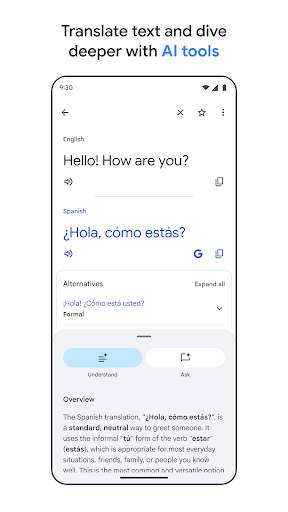
The core value proposition has not changed in years: type or speak something, get a translation back, and in many cases hear it read aloud. What has expanded over time is the number of ways to get text into the app, from your camera to your voice to your own handwriting.
Where It Genuinely Shines
Real users consistently praise the breadth of dialects and languages covered, with one reviewer calling it ‘better than many dictionaries you find now’ and noting it handles both text and voice output well. The conversation feature also gets specific praise for letting people communicate on the fly when they don’t share a language, with one user describing it as ‘fast, easy, reliable’ for exactly that purpose. For quick, single-sentence translations, or for reading a foreign word aloud, it clearly delivers on its basic promise, which is why it remains so widely installed.
The sheer number of supported languages, including many South Asian, African, and regional languages rarely found in competing apps, is a genuine differentiator. For casual, short-burst use, it’s fast and mostly reliable.
The Offline Mode Problem
The most damaging complaints in user reviews center on offline functionality failing exactly when it’s needed most. One reviewer described downloading a language pack before a trip, being told it was ready, then finding the app demanded a re-download once there was no wifi or service available. This is about as bad a failure mode as a translation app can have, since offline mode exists specifically for travelers without reliable connectivity, and losing it abroad with no way to fix it defeats the entire purpose of downloading languages in advance.
Voice Translation Has Real Limits
Multiple users report that voice-based translation breaks down beyond simple sentences. One reviewer estimated only 70% accuracy and noted the feature stops entirely if you pause to take a breath or hesitate for even a fraction of a second, with no way to resume without restarting. Another long-time user said a recent update caused the app to catch only about 5% of speech it used to translate in real time at 95% accuracy, calling out slower processing and multiple redundant translations appearing on screen. For anyone relying on this for actual spoken conversation rather than short phrases, these are serious functional regressions, not minor annoyances.
Interface Changes Keep Frustrating Regular Users
Several reviews point to unwanted UI overhauls disrupting established workflows. One user called a forced update ‘absolutely terrible,’ citing more taps required to reach basic functions and specifically complaining that typing in Chinese now requires minimizing the keyboard just to see Pinyin suggestions. Another user who switched from iPhone to Android missed a ‘new translation’ button that let them clear a screen and start fresh with one tap, something apparently missing on Android entirely. These complaints suggest the app’s cross-platform experience isn’t consistent and that Google periodically ships changes that make daily use clunkier for people who’ve built habits around the old layout.
Who Should Actually Download This
For occasional use, quick text lookups, camera translation of signs or menus, or casual conversations with someone speaking another language, Google Translate remains a solid, free, no-brainer install, and its language coverage is genuinely unmatched. But if you’re planning to depend on offline mode in a remote area with no connectivity, test it thoroughly before you travel rather than trusting a ‘downloaded’ confirmation. And if extended real-time voice translation is your main use case, temper your expectations, since multiple users report it struggling with anything beyond short, uninterrupted sentences. It’s a essential utility with real cracks in its more ambitious features.


