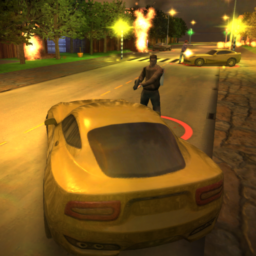


What Payback 2 Actually Is
Payback 2 is a top-down chaos sandbox in the spirit of old-school GTA clones, except it’s built from the ground up for phones. You get seven cities, nine game modes, a pile of vehicles and weapons, and a fifty-event campaign that throws everything from tank battles to helicopter races to street brawls at you. It’s aimed at players who want short, silly bursts of destruction rather than a deep story, and the custom mode lets you mix and match settings to build your own scenarios when the campaign runs dry.
Given the install numbers and the multiplayer leaderboard support, this is clearly a game people return to for years, not just a one-off download. It’s free with ads, which shapes a lot of the player experience discussed below.
The Sandbox Chaos That Actually Works
The core appeal holds up in practice. One reviewer called it a game where you can ‘freely be a menace,’ and that’s the honest pitch here – cops chase you, tanks show up, things explode, and the campaign missions like escaping prison are genuinely challenging without feeling cheap once you learn the patterns. Players also single out the character customization and the sheer number of things to try across modes, races, heists, and brawls as the reason they keep coming back years after first installing it.
The custom mode is the standout feature for longevity. Combining seven cities, nine modes, and varied weaponry means you can build your own scenarios instead of waiting for new content, and several long-time players mention this is what’s kept them engaged since as far back as 2015.
Where the Controls and Presentation Fall Short
Graphics are consistently described as just okay, and animations can look clunky – one reviewer flatly says if you dislike mediocre graphics or weird ragdoll-style movement, this isn’t for you. Controls are another recurring friction point: driving while trying to throw a grenade at the same time feels awkward, which is a real problem in a game built around vehicular chaos and combat happening simultaneously.
There’s also a randomization issue worth flagging. Cars and pedestrians spawn unpredictably, and players report this can actively block timed missions by putting a truck or NPC in exactly the wrong place at the wrong moment, which feels less like emergent chaos and more like bad luck baked into the mission design.
The Ad and Monetization Reality
Ads are the most divisive part of the real-world experience. Some players say there aren’t that many and that removing them is cheaper than in most other games, which is a fair point in Payback 2’s favor. Others describe an unskippable thirty-second ad before every single level, calling it irritating after just a few rounds and something that actively wears down the experience over time. Cosmetic items like clothing are also flagged as overpriced by at least one long-time player, which stings more once you’re already tolerating frequent ads.
Content Fatigue After Long-Term Play
For newer players there’s a ton to chew through, but veterans are candid that the same game modes and maps get stale eventually. One reviewer who’s played since 2015 says they’d like less blocky, more detailed maps and fresh content, since the core loop hasn’t evolved much even as they’ve stuck around. That’s a reasonable ask for a game this widely installed – the bones are solid, but the surface hasn’t kept pace with how long people actually stay.
Who Should Actually Download This
Payback 2 is best for players who want a free, ad-supported sandbox brawler for quick sessions on the go rather than a polished, story-driven experience. If you’re patient with dated visuals, occasional unskippable ads, and slightly fiddly controls, the sheer variety of modes, vehicles, and custom-built chaos delivers real replay value, especially with friends or on leaderboards. If smooth animations and modern graphics are dealbreakers for you, look elsewhere.