





What Waze Does and Who It’s For
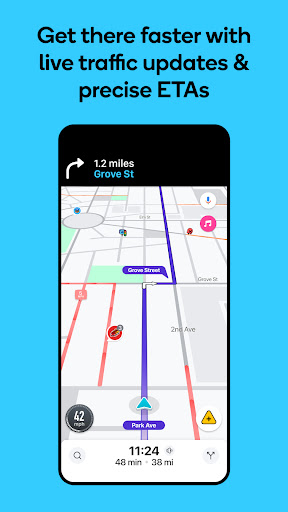
Waze is a crowdsourced navigation app that layers live driver reports on top of turn-by-turn GPS directions. Instead of relying purely on algorithmic traffic data, it pulls in real-time input from other drivers on the road: accidents, police, potholes, debris, speed cameras, and more. It’s built for daily commuters and regular drivers who want to shave minutes off familiar routes, not for occasional road-trippers who just need a basic map. With over 664 million installs, it’s clearly found a large audience among people who drive the same roads often enough to benefit from live rerouting.
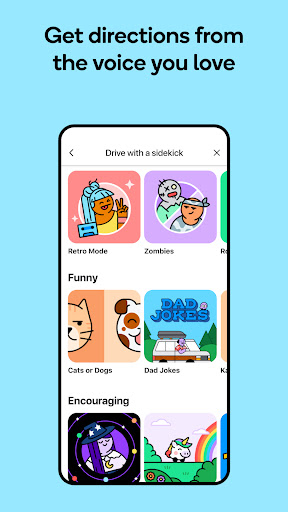
The app also bundles in extras like fuel and EV charging station prices, parking comparisons, toll information, lane guidance, and the ability to run audio apps like podcasts or music directly through its interface. It syncs with Android Auto, and it supports multiple voice options, including celebrity voice packs, for turn-by-turn guidance.
Where Waze Genuinely Delivers
The standout strength, echoed repeatedly in user feedback, is real-time accuracy for everyday driving. One long-time user called it ‘the only directional app I use,’ praising its precision in flagging police, construction, and cars on the shoulder. That kind of live hazard reporting is Waze’s core differentiator, and it clearly works well enough that many drivers won’t touch another navigation app. Users also appreciate being able to actively contribute reports while driving, something one reviewer specifically noted Google Maps didn’t offer as smoothly.
The variety of voice options is another point in its favor, though even fans note there’s room for more variety. Overall, for dense urban driving where traffic patterns shift by the minute, Waze’s community-driven model gives it an edge that static map data can’t match.
The Rerouting Problem That Frustrates Users
The most damaging complaint in user reviews is Waze’s tendency to reroute drivers straight into the same accident or closure it just detected. One reviewer described watching Waze insist on sending them back toward a total lane blockage, even after they manually reported the closure themselves, calling the alternate routes ‘convoluted’ attempts that still ended at the same jam. Another user, focused on rural driving, said the app changed directions mid-transit without notifying them, once even swapping their destination for a similarly named street in a different location entirely. That’s a serious reliability gap for anyone driving outside dense city grids.
A removed ‘detour’ button is another sore point. A reviewer who’s used Waze for years said the app used to let drivers manually trigger a detour, and its absence now, combined with no easy way to add a stop mid-route, has pushed them to split time between Waze and Google Maps instead of using Waze exclusively.
Audio and Stability Issues Worth Knowing About
Multiple complaints center on audio behavior. One user reported that Waze now refuses to play voice directions through the phone speaker whenever any Bluetooth device is connected, even with the speaker option selected properly, forcing them to disable Bluetooth entirely just to hear directions. Another said the character voice packs are too quiet to hear over road noise or background music, even at full volume. These aren’t minor gripes since audio guidance is the entire point of hands-free navigation.
Stability has also come up: one reviewer described the app crashing repeatedly, failing to respond to typed or spoken addresses, and needing a full reinstall before it worked again. It’s not clear how widespread this is, but it’s a real occurrence, not a hypothetical.
Who Should Actually Download This
Waze makes the most sense for city and suburban commuters who deal with unpredictable daily traffic and want live, human-reported hazard data that generic map apps don’t offer. If you drive the same routes often and want the fastest path around accidents, construction, or speed traps, the crowdsourced reporting genuinely pays off. It’s less convincing for rural drivers, given the reported issues with inaccurate rerouting and destination mix-ups outside urban areas.
If you rely heavily on Bluetooth audio for calls or music while navigating, test the app’s behavior first, since the reported speaker/Bluetooth conflict could be a dealbreaker. Overall, Waze remains a strong, free navigation option, but it’s not flawless, and long-time users clearly miss some control features that were quietly removed.


