






What This All-In-One App Tries To Do
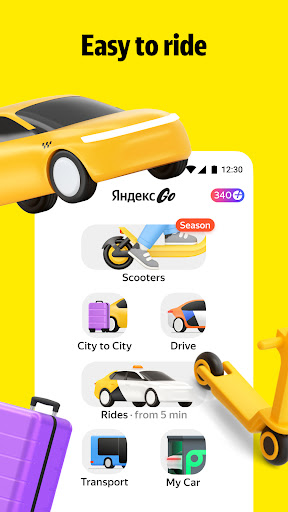
Yandex Go bundles a lot under one roof: taxi rides in several tiers (Economy, Comfort, Minivan, Carpool, City to City), scooter rentals, carsharing, package delivery, restaurant food orders through Yandex Eats, and even a Market shopping tab and public transport schedules. It’s built primarily for users in Russia and neighboring countries like Uzbekistan and Serbia, where Yandex’s ecosystem is dominant and Uber has limited or no presence. If you live in one of these regions and want a single app for getting around, grabbing lunch, and ordering deliveries, this is the pitch. Anyone outside that footprint downloading it out of curiosity will find far less reason to stick around.
Where It Actually Works Well
When the core ride-hailing function fires correctly, users note it can be more affordable than a standard metered taxi, and features like scheduled City to City rides or child-seat options fill genuine gaps that other apps in the region don’t cover. The breadth of services is real: cars, scooters, carsharing, delivery, and food ordering are all reachable without switching apps, which is convenient in theory. Yandex Plus cashback points also give frequent users of Comfort rides or Eats orders a reason to stay loyal, since points carry across different parts of the ecosystem.
The Crashes, Freezes, and Server Errors
The most repeated complaint in real user feedback is stability. Multiple reviewers describe the app crashing repeatedly right after opening, with one calling it a pattern of ‘duplicate bad reviews’ because the same crash keeps recurring. Others report the app failing to open at all, throwing a ‘server error, please try again later’ message up to 80% of the time, and then, once it does open, showing no available cars on the map even though a ride was supposedly summoned. One user flatly says arranging cabs ‘never worked a single time.’ On top of that, some installs show Russian-language content even on devices with no Russian language or region settings, suggesting localization for international markets is incomplete or inconsistent.
Billing Problems and Support That Doesn’t Help
Beyond crashes, the more troubling complaints involve money. One reviewer describes being overcharged twice and billed for a ride they never requested, then being taken miles from their actual destination before realizing something was wrong with the driver assignment — and customer service is described as ‘politely nonresponsive.’ Another user in Serbia says they were charged 1300 RSD for a 3km ride, roughly double the official taxi rate, with no itemized receipt beyond an unzoomable map screenshot, leaving no way to actually verify what was charged. A separate complaint criticizes Yandex for splitting delivery into a pricier parcel category that costs twice as much as a regular ride, calling the pricing direction increasingly ‘greedy.’ These aren’t one-off gripes; they point to a pattern of opaque billing that support isn’t resolving.
Interface Clutter and Everyday Friction
Even when the app is technically functioning, users describe it as sluggish on modern phones, with a bottom-sheet promotional banner appearing on every launch that reviewers find ‘incredibly annoying.’ The Shops and Eats sections are singled out as cluttered with banners, buttons, and offers stacked on top of each other, making basic navigation feel unnecessarily complex. Smaller annoyances add up too: the app repeatedly suggesting a delivery address roughly 100 meters from the correct one despite the correct address being entered dozens of times, and failing to remember a saved phone number between sessions. There’s also a specific access problem for travelers: some users report being unable to register an account after swapping SIM cards in a new country like Uzbekistan, which blocks the app entirely for exactly the kind of visitor who might want to use it.
Who Should Actually Download This
Yandex Go makes sense mainly for residents of the regions where it’s the default ride and delivery option and where alternatives are scarce, and even then, users should expect occasional crashes, unclear pricing, and support that may not resolve billing disputes quickly. Travelers hoping to set it up before a trip should be aware that registration can fail after a SIM swap, and should have a backup transportation plan. Given the volume of complaints about overcharging, phantom rides, and unresponsive support, anyone relying on it for a genuinely important trip — an airport run, a late-night ride — should go in with tempered expectations rather than treating it as a dependable Uber substitute.


