


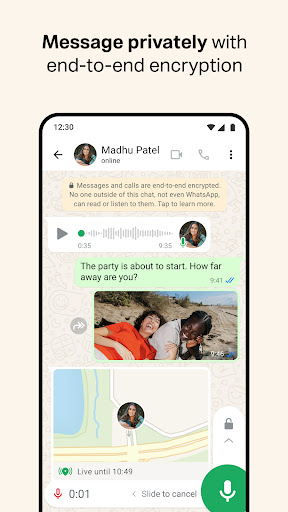



WhatsApp remains the default messaging app for a huge chunk of the world, and after using it daily for calls, group chats, and file sharing, it’s easy to see why. The end-to-end encryption is baked into everything by default, so you’re not fiddling with settings to keep conversations private, and setup is genuinely painless since it just uses your phone number instead of yet another username and password to remember. Voice and video calls hold up well even on mediocre connections, which matters if you’re talking to people overseas on spotty WiFi.
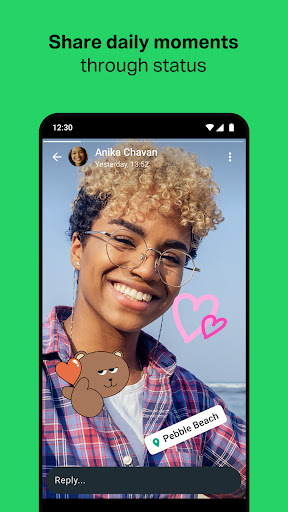
That said, it’s not without friction. Backups can be a hassle depending on how you’ve set up Google Drive or iCloud storage, and if you switch phones without checking your backup settings first, you can lose message history. The app has also grown heavier over the years — Status, Channels, Communities, and the Meta AI integration make the interface feel busier than the simple texting app it started as. If you just want to send messages, all the extra tabs can feel like clutter you’re forced to scroll past.
Group chats are reliable and support up to 32 people on calls, which is genuinely useful for families or teams, and sharing photos, videos, and documents across mobile and desktop works smoothly. The Wear OS support is a nice touch for anyone who wants to glance at messages without pulling out their phone, though it’s a minor feature most users won’t touch.
The elephant in the room is the Meta ownership. Even with encryption intact, some users remain uneasy about metadata sharing and how it ties into Meta’s broader ecosystem. WhatsApp is also entirely dependent on an internet connection — there’s no fallback to SMS if data drops, unlike some competitors. Still, for sheer reach and dependability across 180+ countries, it’s hard to argue with the numbers; nearly everyone you know is probably already on it, which is ultimately the app’s biggest selling point.


