



What Rakuten Viber Messenger Actually Offers
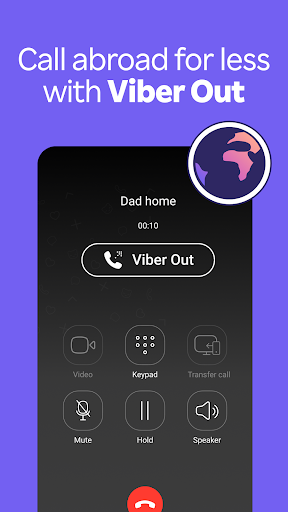
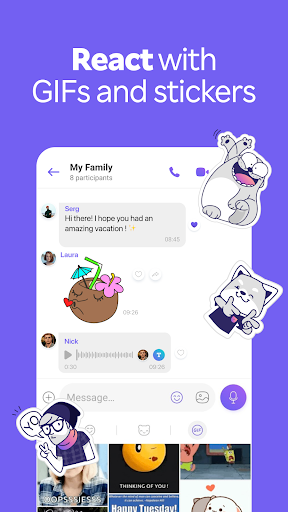
Viber has been around long enough to become one of the default messaging apps in certain countries, and its feature list reflects that maturity: free text, voice and video messages, group chats for up to 250 people, disappearing messages, stickers, GIFs, communities and channels, plus Viber Out for calling actual phone numbers at a low cost. It is aimed at anyone who needs to stay in touch with contacts abroad, especially in regions where Viber became the local standard rather than WhatsApp or Messenger. If your family, friends, or coworkers already live inside Viber, you probably don’t have much choice but to install it too.
The app also tries to double as a lightweight social platform through Communities and Channels, letting people follow topics like news or cooking rather than just messaging individuals. On paper, that’s a lot packed into one app, and for a chunk of its billion-plus install base, it clearly works well enough to keep them there.
Where It Genuinely Performs Well
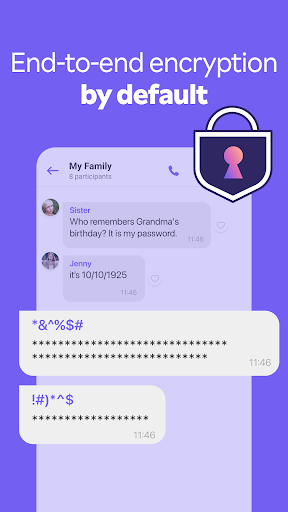
Long-term users who stick with Viber tend to praise its stability over time and its end-to-end encryption, which is on by default for one-on-one calls and chats. One reviewer with over a decade of use called it reliable ‘without any extra garbage to get in the way,’ and specifically liked the smooth sync across phone, laptop, and other devices. Another long-time user pointed out the double verification step required when adding new devices to an account, which is a genuine security plus most casual chat apps don’t bother with.
Voice and video calling across unstable connections also gets some real credit — one user calling contacts in the Philippines noted that Viber handles connection loss and reconnection better than expected on shaky mobile networks. For people calling internationally on inconsistent internet, that kind of resilience matters more than flashy features.
The Recurring Complaints That Are Hard to Ignore
The most common and heavily upvoted complaints center on basic reliability: crashing, glitchy calls, and an inability to even end a call properly once it’s been accidentally started. One reviewer flatly called it one of the worst texting apps they’d used, frustrated that it’s become unavoidable simply because so many contacts only use Viber. Another described a call where audio worked one direction only, followed by the app refusing to open at all after an update — surviving neither an uninstall/reinstall nor two phone restarts.
File sharing draws particularly sharp criticism. Multiple reviewers, across different phones and even the desktop app, describe it as essentially broken for sending attachments, with even small files struggling where competing apps send instantly. Regional performance issues also show up repeatedly, with users in Myanmar and Thailand describing slow or failed photo sending, missing incoming photos, and account activation codes that never arrive when switching devices — a serious problem for anyone trying to migrate their account.
Who Should Actually Install This
Viber makes the most sense for people who need to communicate with contacts in regions where it’s already the dominant app, or those who specifically want Viber Out’s cheap landline calling to countries where that matters. If your existing contacts are already there, encryption and cross-device sync are real strengths worth having.
If you’re choosing a messaging app from scratch with no regional pressure to use Viber, the complaints about crashing, file transfer failures, and unreliable calls are frequent and specific enough to take seriously. This isn’t an app that fails occasionally on obscure edge cases — core functions like ending a call or sending a photo are the things breaking. Go in expecting a mixed experience: solid for some, frustrating for others, largely depending on your region and network.